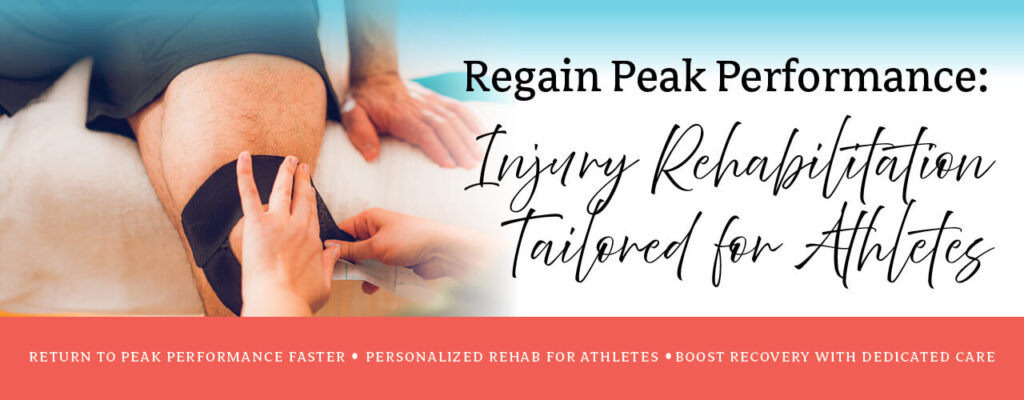
After years of competitive basketball, Jackson (not his real name) was no stranger to soreness. But when a sharp pain in his knee started interfering with practices, games, and even daily tasks, he knew this wasn’t typical post-workout discomfort. Diagnosed with patellar tendinopathy, Jackson turned to Fit 4 Life for a focused injury rehabilitation plan that would allow him to return to sport without compromising his long-term health.
At Fit 4 Life, our approach to injury rehab prioritizes performance, recovery, and injury prevention through personalized, research-supported care. Jackson’s story shows how athletes can recover fully and safely while building long-term strength and movement confidence.
The Challenge: Pain That Kept Getting Worse
Jackson was a 19-year-old college athlete who trained six days a week. He started noticing pain just below his kneecap during drills involving jumping or sprinting. Over time, the discomfort progressed to the point where:
- Stairs became painful
- Prolonged sitting led to stiffness
- His vertical leap declined due to pain during takeoff
- Confidence in his knee strength and control was reduced
Ice and rest brought only brief relief. Missing practices and watching his performance decline became frustrating. He knew he needed more than a temporary fix; he needed a plan to heal and return stronger.
Evaluation and Strategy at Fit 4 Life
Jackson’s physical therapist began with a detailed movement screen and strength testing. His evaluation revealed:
- Decreased eccentric control in the quadriceps
- Limited hip mobility affecting jump mechanics
- Imbalanced strength between his left and right leg
- Faulty landing patterns during agility movements
With a clear picture of contributing factors, the therapist created a tailored injury rehabilitation plan designed to relieve stress on the tendon, rebuild strength, and improve Jackson’s movement mechanics.
The Role of Targeted Injury Rehabilitation in Athletic Recovery
At Fit 4 Life, our treatment for Jackson followed a progressive framework based on proven rehabilitation principles. His program included:
1. Isometric Strengthening for Pain Reduction
To begin, Jackson performed isometric quad holds at specific joint angles, which helped reduce tendon pain while maintaining muscle activation.
2. Eccentric and Heavy Slow Resistance Exercises
As pain decreased, eccentric loading was introduced to improve tendon capacity. Jackson performed controlled squats and step-downs under the supervision of his therapist to gradually rebuild tissue tolerance.
3. Hip and Core Stabilization
Weakness in the lateral hips and core contributed to poor jump and landing mechanics. Targeted strengthening reduced lateral knee stress and improved alignment during sport-specific movements.
4. Mobility and Movement Training
Improving ankle and hip mobility gave Jackson better control during cutting and jumping. Dynamic mobility drills were used daily to reinforce his range of motion and reduce compensations.
5. Return-to-Sport Drills
The final stage included agility, deceleration training, and vertical leap mechanics to simulate real game demands. These drills gave Jackson the opportunity to rebuild confidence in high-demand situations before returning to competition.
Progress and Results
Over the course of three months, Jackson progressed from limited activity to full-speed scrimmages. His pain decreased steadily and eventually resolved completely. By the end of his program:
- His single-leg hop distance improved
- Vertical jump height returned to pre-injury levels
- Quad strength was equal between both legs
- He returned to full practice participation with no restrictions
- Confidence in movement and performance was fully restored
More importantly, Jackson gained tools to support long-term performance, including warm-up routines, recovery strategies, and movement cues to reduce tendon stress.
A Message to Other Athletes in Recovery
Athletes often push through pain, hoping it will resolve on its own, but chronic pain can derail training and performance if not addressed early. Jackson’s success shows how structured, individualized injury rehabilitation can restore function while preparing the body for higher-level movement demands.
Get Back in the Game with Fit 4 Life
At Fit 4 Life, we specialize in helping athletes of all levels return to sport after injury. Our approach combines hands-on care, corrective exercise, and performance coaching to guide you through a safe, effective recovery.
If you’re dealing with persistent pain, overuse injury, or a performance setback, contact Fit 4 Life today to begin your personalized injury rehabilitation program.
Tags: mobility restoration, athlete injury rehab, performance optimization, sports recovery therapy